

Eating Disorder Therapy in Durham Region
Eating disorder therapy for adults who want a different relationship with food, their body, and themselves.
If eating, your body, or thoughts about food are taking up more space in your life than you'd like, you don't have to figure it out alone. At Cedar Tree Therapy, eating disorder-informed psychotherapy is available for adults in Whitby and throughout Durham Region, as well as virtually across Ontario. Eating disorders are rarely just about food. Food and eating behaviours can become connected to anxiety, perfectionism, control, trauma, self-worth, body image, stress, relationships, or a desire to feel safe in an unpredictable world. For some people, this looks like restricting food or following increasingly rigid rules. For others, it may look like binge eating, emotional eating, or feeling completely out of control around food. Therapy can help you understand this cycle rather than simply trying to stop the behaviour. At Cedar Tree Therapy, we work collaboratively to understand what your eating behaviours are doing for you, what is maintaining them, and what you need in order to move toward recovery.
Anorexia Nervosa
Anorexia involves significant restriction of food intake and may involve intense fear of weight gain, difficulty maintaining adequate nutrition, or a persistent disturbance in how you experience your body or weight.
Therapy focuses on both the eating disorder behaviours and the underlying factors that make recovery difficult.
Bulimia Nervosa
Bulimia can involve recurrent binge eating followed by compensatory behaviours such as vomiting, excessive exercise, fasting, or other attempts to “undo” eating.
Treatment can help interrupt the binge/compensate cycle while addressing the emotional, cognitive, and behavioural factors underneath it.

Binge Eating Disorder (BED)
Binge eating can involve episodes of eating where you feel unable to stop or in control, often followed by guilt, shame, or attempts to compensate.
Treatment can address the binge/restrict cycle, emotional triggers, dieting patterns, perfectionism, shame, and the thoughts and behaviours that maintain binge eating

Body Image
Our goal is to be able to live your life without constantly thinking about your body. Body image concerns can show up in many forms, including: frequent body checking, avoiding mirrors or photographs, comparing your body to other people's bodies, feeling uncomfortable wearing certain clothing, avoiding social situations because of how you feel about your body, constantly thinking about changing your body, feeling that you need to reach a certain weight before you can enjoy your life, and/or experiencing distress after eating.
Therapy can help you develop a more flexible relationship with your body and reduce the amount of time and energy spent monitoring, judging, or trying to control it.
The Body Image Course is a free resource created to help promote positive body image.
Who I Work With
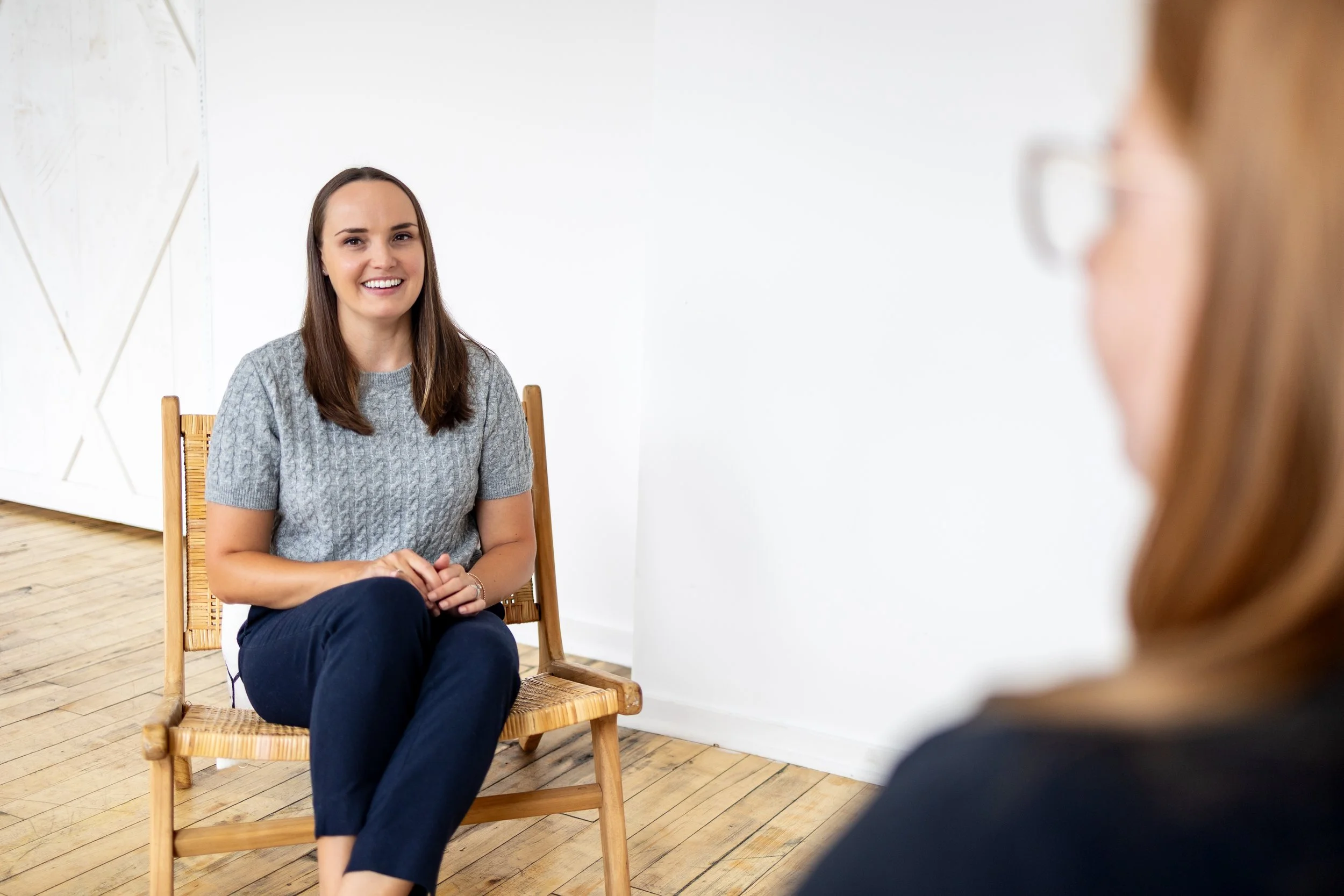
I provide eating disorder-informed psychotherapy for adults (18+) experiencing eating concerns or eating disorders.
Maybe your eating disorder has been activated (or reactivated) by a relationship ending, menopause, becoming a parent, divorce, or moving away to university.
Maybe you were a high performing athlete and are beginning to transition away from this time in your life. You might find yourself leaning on your eating disorder to cope. As an athlete, it may feel confusing with the values sport has taught you of discipline, pain and sacrifice and how this feels like it contrasts with eating disorder recovery.
Maybe you simply want to have a better relationship with food and don’t want to pass on negative body image beliefs and dieting on to your children.
Or, perhaps you just completed an eating disorder program and are wondering how to transition back into the community and back into your day to day life. Perhaps you need support with executing and achieving the goals you laid out in your treatment.
In any case, all of the above describe people that I see in eating disorder treatment with me.